

Reviewed · BUENOS AIRES WALKING TOURS
Jewish Sites Buenos Aires Private Walking and Car Tour
Buenos Aires’ Jewish story comes into focus at places where culture, loss and memory meet. I like that this private tour links landmarks such as Templo Libertad and AMIA with the people and events behind them, and that you can add the Salvador Kibrick Museum or a car-based itinerary to suit your time.
The main consideration is that the 2-hour option is a focused walk, not an all-access museum tour: synagogue entry is not included, and the Salvador Kibrick Museum is reserved for the 3- and 4-hour options. If you want the extra context and broader city route, plan for the longer tour.
- Templo Libertad: See the façade of Argentina’s first synagogue and hear about the early Jewish community.
- AMIA: Learn about the 1994 bombing and its lasting effect on Jewish life in Argentina.
- Museum choice: The Salvador Kibrick Jewish Museum is included only on the 3- and 4-hour tours.
- More ground covered: The 4-hour option adds private transport and stops at several city landmarks and memorials.
- Private guide: Commentary is offered in English, Spanish, French, Italian or Portuguese, with a private group of up to 25 people per guide.
Buenos Aires’ Jewish story, told on the streets
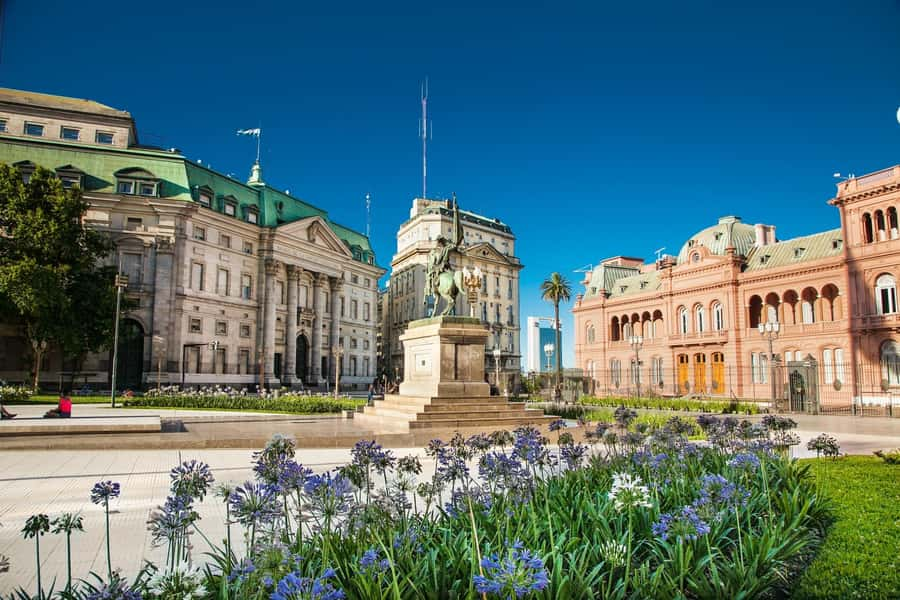
This tour is about more than a sequence of buildings. It gives you a guided introduction to the Jewish community’s place in Buenos Aires, from early immigration and cultural life to the painful legacy of attacks and the work of remembrance. The landmarks help anchor those stories, while a private guide can adjust the pace and commentary to your interests.
A guide named Richard Shpuntoff has led this tour. He was praised for warmth, openness and for connecting historical events with personal and family stories. That kind of perspective can make a difficult subject easier to understand, though guide assignments may vary, so ask the operator if you have a particular guide in mind.
The format is private, so you can ask questions without keeping pace with a large mixed group. The listed group size is one to 25 people per guide; larger parties are assigned additional guides. If you are traveling as a couple or small family, the private format may feel especially personal. For a larger group, it offers a shared experience, though you will want to consider how the per-person price compares with your group’s budget.
Templo Libertad and the early community
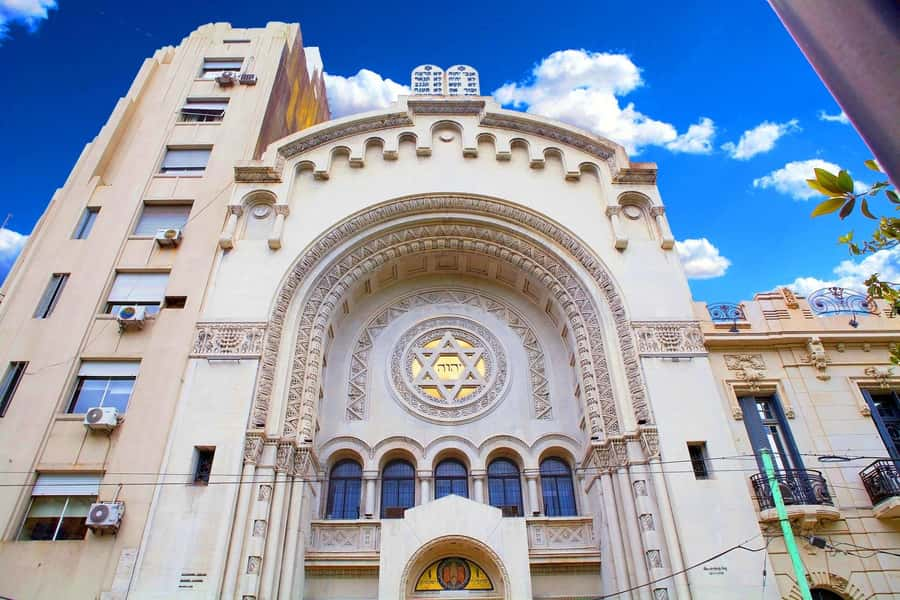
The walk begins in the area around Libertad Street, where Templo Libertad is the central architectural landmark. It is described as Argentina’s first synagogue, and its façade offers a tangible starting point for a discussion of the Jewish diaspora’s early roots in the country.
Entry to synagogues is not included, so expect to see the building from outside rather than tour its interior. That is a useful distinction when you are deciding what the tour offers: the focus is on guided interpretation of sites and their setting, not access to every religious building.
Nearby, you pass the Museo Judío de Buenos Aires, also known as the Dr. Salvador Kibrick Jewish Museum. On the 2-hour option, this is an exterior stop or passing point rather than an included museum visit. The museum’s collections cover immigration and integration, giving you a sense of how the community’s story can be explored through objects, photographs and documents.
If you want to see those collections, choose the 3-hour or 4-hour tour. Admission to the Salvador Kibrick Museum is included with those options. Foreign visitors must bring an original passport for security, while Argentine visitors need their national identity card. Make sure you have the required original document with you; a photo or photocopy is not what the stated rule asks for.
More walking tours in Buenos Aires:
- Buenos Aires Hop-On Hop-Off Bus, Free Walking Tours & Discounts
★ 4.5 · 2,218 reviews - Buenos Aires: La Boca Guided Walking Tour in English
★ 4.8 · 1,587 reviews - Nazis in Buenos Aires: a historical walking tour
★ 4.9 · 193 reviews
The Holocaust Museum and the weight of memory
The route also includes the Buenos Aires Holocaust Museum. Here, the guide discusses Argentina’s role during and after World War II, along with the stories of survivors who made new lives in the city. It is a sobering part of the tour, but an important one: the story of Jewish Buenos Aires is not only about arrival and community building, but also about survival and remembrance.
The tour information does not specify museum admission, so do not assume that an interior visit is included. Your guide’s commentary is the stated part of this stop. If entering the museum is important to you, check the details with the operator before booking rather than relying on the stop name alone.
This section can prompt questions about both past events and Argentina’s more recent political climate. A private guide is useful here because you can ask for clarification or spend more time on the subjects that matter to you. Feedback about the tour has particularly highlighted guides who give clear context and connect the historical account to present-day life, but the exact discussion will depend on your guide and your questions.
AMIA, remembrance and resilience
The visit to AMIA, the Asociación Mutual Israelita Argentina, brings the tour to one of its most emotionally charged sites. The guide explains the 1994 bombing, one of the darkest events in Argentine-Jewish history, and how it continues to shape the community and the country.
This is not a light sightseeing stop. It is a place to consider the people affected and the way a community remembers and responds to violence. The tour’s value lies in linking a physical landmark to its human meaning, rather than treating the site as just another point on a map.
The itinerary also includes the Israeli Embassy Memorial on the 4-hour option. It commemorates the 1992 attack, giving you a wider view of the history of attacks against Jewish targets in Buenos Aires. Seeing the AMIA site and Embassy Memorial in one outing gives the longer tour a clear focus on remembrance, while the guide can help distinguish the events and explain their lasting impact.
The 3-hour museum option adds objects and documents
The 3-hour tour is a sensible choice if you want more than an outdoor introduction but do not need private transport across the city. Its key addition is entry to the Salvador Kibrick Jewish Museum, where ritual objects, photographs and historical documents provide a closer look at Jewish life in Buenos Aires.
Museum collections can make broad historical themes more concrete. A discussion of immigration, identity or religious practice takes on another dimension when you can see objects and records connected to those subjects. The museum visit also gives the tour a useful change of pace after walking between sites.
The 2-hour and 3-hour options are both described as moderately paced walking tours, with about 25 to 30 minutes on foot. The route may include uneven surfaces or steps, so comfortable shoes are a practical choice. The tour runs rain or shine, which makes weather-ready clothing worthwhile even if the forecast looks uncertain.
More private tours in Buenos Aires:
- Buenos Aires Private City Tour with Local Guide
★ 5.0 · 308 reviews - Buenos Aires: Personalized 2 to 8-Hour Private Walking Tour
★ 4.7 · 149 reviews - Buenos Aires Private City Tour with a local guide
★ 4.7 · 92 reviews - Semi Private City Tour of Buenos Aires
★ 4.5 · 85 reviews
The 4-hour route by private car
The 4-hour option is the broadest version of the experience. It includes private transport with pickup and drop-off at your accommodation, museum entry and additional landmarks. The car makes it possible to connect the Jewish heritage sites with a wider view of Buenos Aires without relying on your own transport between stops.
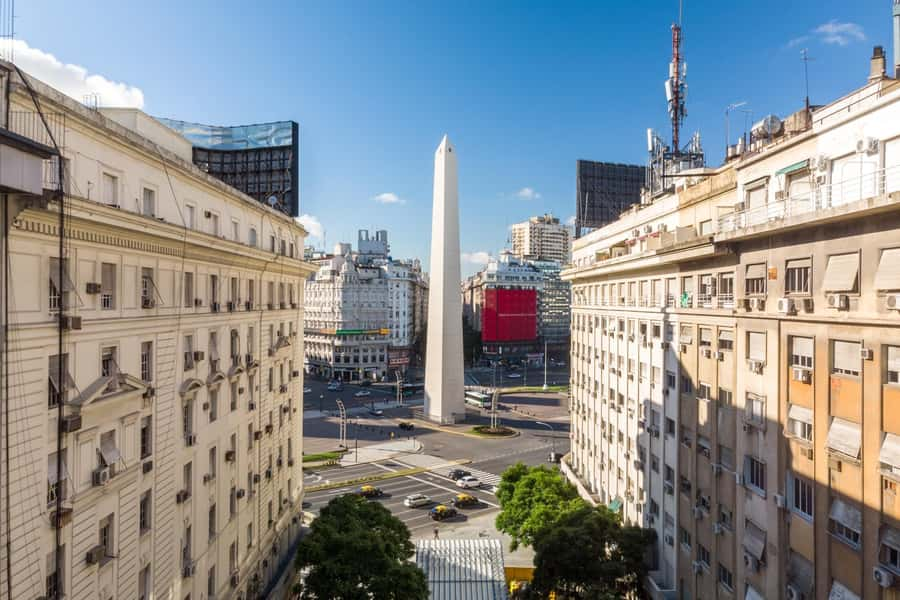
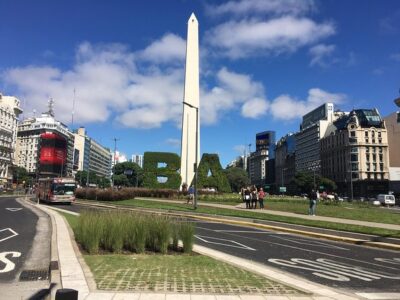
Along with Plaza Libertad, the route includes 9 de Julio Avenue, one of the world’s widest boulevards, and Plaza General San Martín, a public space tied to Argentina’s military and immigrant history. These stops add city context to the Jewish story, setting community landmarks within the larger urban and national picture.
You also visit the Israeli Embassy Memorial, which commemorates the 1992 attack. Taken together with AMIA, it deepens the focus on remembrance and the history of violence against Jewish institutions in the city. The extra time is not simply more sightseeing; it gives the guide room to connect more places and themes.
The car option is the best fit if you want to cover the wider itinerary with less of the experience spent getting between areas on foot. It still includes stops, so it is not a no-walking tour. If your priority is only the central Jewish heritage sites, the shorter walk may be enough. If you want the museum, memorials and broader city context, the 4-hour version makes a stronger case.
Is $129 per person good value?
At $129 per person, the tour’s value comes from private guiding and the option to choose how much of the story you want to cover. The 2-hour version is a compact introduction, with a guide to interpret key sites. The longer options add museum admission, and the 4-hour tour also includes private transport and hotel pickup and drop-off.
That distinction matters when comparing the options. The 2-hour price does not include the Salvador Kibrick Museum or transport, so you are paying for the guided walk rather than a bundled day out. The 3-hour choice adds the museum, while the 4-hour version offers more sites and a car. The supplied price does not break down costs by duration, so check the selected option’s final price before you book.
For a private group, the cost may make more sense when shared among several people, but the listed price is per person. A private guide can offer flexibility and direct attention, which is particularly useful for a topic that raises questions or deserves a slower pace. If you mainly want a general overview and are comfortable exploring independently, you may find the short tour more than sufficient. If the stories and memorials are central to your Buenos Aires visit, the added museum and car itinerary can justify the longer commitment.
Practical details before you go

The meeting point for the walking tours is in front of Hotel Presidente at Cerrito 850. Do not go inside: the hotel is only a meeting point, and its staff are not informed about the tour. The 4-hour option includes pickup and drop-off at your accommodation.
Tours are offered in English, Spanish, French, Italian and Portuguese. Check your email the day before for important information from the operator. The walk takes place in varying weather, and the ground may be uneven or include steps, so wear comfortable shoes and come prepared for rain or sun.
The tour offers free cancellation up to 24 hours in advance, and you can reserve now and pay later. If you have specific needs, contact customer support ahead of time so the guide can plan to adjust the pace.
Who should choose this tour?
I would choose this tour if you want a thoughtful introduction to Jewish life in Buenos Aires and prefer to hear the history from a guide rather than piece it together at each stop. It is especially suited to visitors with a personal, cultural or historical interest in the community, and to anyone who wants context around AMIA and the Embassy Memorial.
Choose 2 hours for a focused outdoor walk. Choose 3 hours if seeing the Salvador Kibrick Museum matters to you. Choose 4 hours if you want museum entry, private transport and the additional landmarks in one outing.
This is not the right pick if your priority is entering synagogues, since that is not included. It is also worth thinking carefully about the subject matter: the tour includes discussion of attacks and loss, as well as resilience and community life. If that balance suits what you want to learn, the private format offers a useful, human-scale way to understand an important part of Buenos Aires.
FAQ
Where does the walking tour meet?
Meet your guide in front of Hotel Presidente at Cerrito 850. Do not enter the hotel; its staff are not informed about the tour.
Which tour options include the Salvador Kibrick Jewish Museum?
Museum entry is included in the 3-hour and 4-hour options. It is not included in the 2-hour option.
Do I need identification to enter the museum?
Yes. Foreign visitors must present an original passport, while Argentine visitors must present a national identity card.
Does the tour include entry to synagogues?
No. Entry to synagogues is not included.
Which option includes private transportation?
Only the 4-hour tour includes private transportation, with pickup and drop-off at your accommodation in Buenos Aires.
What languages are available?
The live guide is available in English, Spanish, French, Italian and Portuguese.
How much walking is involved?
The 2-hour and 3-hour options are moderately paced walking tours with approximately 25 to 30 minutes on foot. The route may include uneven surfaces or steps, and the tour runs rain or shine.
Just added in Buenos Aires
- Tango Show at El Querandi with optional Dinner★ 4.2 · 3 reviews
- Wine Tasting in Buenos Aires★ 4.2 · 4 reviews
- Walking Tour: Buenos Aires bookstores★ 4.3 · 12 reviews
- Velez Sarsfield Football Match★ 5.0 · 3 reviews
- Private Underground Tango Immersion★ 5.0 · 31 reviews
- Tour Buenos Aires in one day on Electric Scooters★ 5.0 · 33 reviews
- Transfers from or to the airport In Argentina Your Best Choice★ 5.0 · 28 reviews
- River Plate Monumental Stadium and Museum Guided Tour★ 4.5 · 39 reviews
Buenos Aires Walking Tours, compared.
Buenos Aires Hop-On Hop-Off Bus, Free Walking Tours & Discounts
Read our review →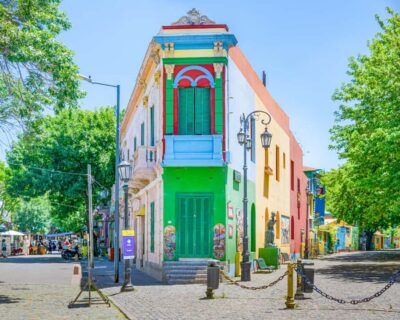

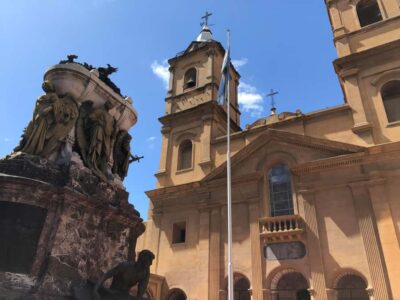
Nazis in Buenos Aires: a historical walking tour
Read our review →
Buenos Aires Walking Tour with Local Guide and Optional Rooftop
Read our review →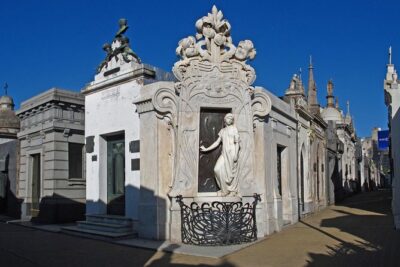
Browse the lists this tour appears in