
Reviewed · BUENOS AIRES WALKING TOURS
Best of Buenos Aires Private Walking Tour
Buenos Aires tells a surprising story in its buildings: a British clock tower faces a memorial to the Falklands War, while French-inspired palaces line avenues in South America. This private walk links those contrasts with the people and politics behind them, then finishes in Recoleta.
I like the route’s mix of major landmarks and local stories, from Florida Street and the Kavanagh building to the Anchorena family’s church and palace. I also like that the guide can connect architecture to immigration, Argentina’s relationship with Britain, and the country’s changing fortunes.
The main consideration is the amount of ground covered. The tour is advertised at about 2.5 hours, with a three-hour approximate duration, and one account describes it as a solid walk. The Recoleta Cemetery visit is planned, but the full list of sights can vary with timing and city conditions.
- A private walk from Florida Street to Recoleta gives your group the guide’s attention, with no strangers setting the pace.
- British and Argentine history meet at Torre Monumental, across from the memorial to the 1982 South Atlantic war.
- Grand architecture comes with human stories, including the Kavanagh skyscraper, the Paz Palace and the Anchorena family.
- Recoleta Cemetery admission is included, and the planned visit gives time for stories about Evita Perón and other notable figures.
- The walk ends at La Biela, near restaurants and other Recoleta sights, so you can continue exploring on your own.
A city walk built around architecture and stories
Buenos Aires is often called the Paris of the South, and this route shows why. You’ll see French-influenced facades, formal avenues and palatial homes, but the guide also looks beyond the European style to explain the city’s British connections, immigrant communities and political history.
The walk links central Buenos Aires with Recoleta, covering at least 25 sights and stories along the way. Many stops are brief, often around five minutes, so expect to hear a focused explanation while looking at a building or monument from outside. The two longer planned visits are Patio Bullrich and Recoleta Cemetery.
The experience is private, which matters on a history-heavy route. You can ask questions and set the tone for your group, though the tour still needs to keep moving to fit in its many stops. Past guides have included Martin, Mariano and Carlos. Your guide may be someone else, but English-speaking guiding is included.
Florida Street opens the story
Meet outside Florida Garden, at Florida 899, near the corner with Paraguay Street. The instructions say to look for a guide carrying or wearing a small BA Walking Tours sign and to arrive by 10 a.m. at the latest. The tour begins with a short introduction, then heads along Calle Florida.
Florida Street is one of Buenos Aires’ oldest shopping streets. It connects the city’s founding area around Plaza de Mayo with Plaza San Martín, and its role as a commercial artery makes it a useful place to begin a walk about how the city grew. The stop is brief, so think of it as an orientation and a first lesson in the city’s layers, not a long shopping break.
The route then reaches the Basilica del Santísimo Sacramento, built in 1916 for Mercedes Anchorena and her family. Its striking appearance is only part of the story: the guide also tells tales of love, power and family conflict connected to the church. That social detail helps make the ornate buildings feel less like a parade of facades.
More walking tours in Buenos Aires:
- Buenos Aires Hop-On Hop-Off Bus, Free Walking Tours & Discounts
★ 4.5 · 2,218 reviews - Buenos Aires: La Boca Guided Walking Tour in English
★ 4.8 · 1,587 reviews - Nazis in Buenos Aires: a historical walking tour
★ 4.9 · 193 reviews
Kavanagh and the British clock tower
At Plaza San Martín, the Edificio Kavanagh brings the city’s Art Deco era into view. It was commissioned in 1934 by Corina Kavanagh, a wealthy woman of Irish descent, and built in just 14 months. Once the tallest building in Latin America, it remains one of Buenos Aires’ best-known skyscrapers and is recognized as a UNESCO heritage building.
The details behind its construction give the stop more bite than a quick photo. Kavanagh sold two ranches at age 39 to finance the tower, and its story is tied to the wealthy families who shaped the city. You’ll see how modern ambition sits beside grander, older architecture in this part of town.
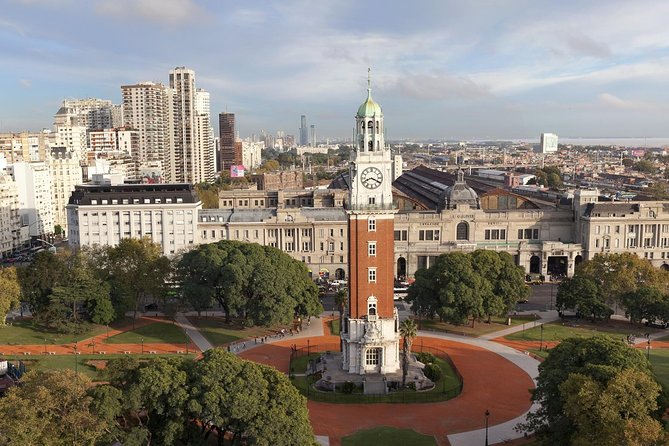
Nearby, the Torre Monumental is a British-built clock tower and a starting point for discussing England’s influence on Argentina. Directly across from it, the memorial to the 1982 South Atlantic war gives that conversation a sharp political edge. The guide addresses the long, complicated relationship between the two countries, including the Falklands, known in Argentina as the Malvinas.
This is one of the route’s most useful contrasts. Rather than treating the tower as a pretty landmark on its own, the walk pairs it with a memorial that changes how you read the surrounding public space. If you want to understand Buenos Aires beyond its European-looking streets, pay attention here.
Palaces, immigration and the city’s fortunes
Plaza San Martín has served many purposes: the area once held a fort and a bullfighting ring, and it was close to former slave depots. Today the plaza is marked by a monument to General José de San Martín, Argentina’s leading independence figure. The guide tells his story and places the square within the country’s longer political past.
From there, the route passes Palacio Paz, a vast city palace built for José C. Paz, owner of one of the city’s most widely circulated newspapers and an aspiring president. The building was made with materials imported from France. Its reported 120 rooms for a family of four offer a memorable measure of the ambitions of the era.
Palacio San Martín is another grand residence with a layered name. It was built for the Anchorena family, and the tour returns to Mercedes Anchorena’s influence, including her role in building a church nearby for her family. These stops help explain how a small circle of wealthy households left such a large mark on Buenos Aires’ streets and institutions.
Palacio Estrugamou introduces the Parisian look of Barrio Norte. Here the guide connects the elegant blocks and mansions to immigration from Spain, Italy, France and Britain, and to Argentina’s rise and decline between 1880 and 1930. You get more than a style lesson: the buildings become evidence of the country’s changing fortunes and its ties to Europe.
The route also pauses at the site of the former Israeli Embassy. A bomb blast in 1992 killed 24 people. The guide explains the attack and its aftermath, along with questions of politics and justice in Argentina. It’s a somber stop, and a reminder that this tour does not limit itself to handsome architecture.
From a French embassy to a horse auction house
The French Embassy occupies what was originally the Ortiz-Basualdo Palace. Its past includes a visit by Edward VII of England with his American future wife, a detail that gives the formal facade a more personal history. The route’s short stops work best when you listen for these specific stories; they turn a quick look into something you can remember.
Patio Bullrich offers a less obvious view of British influence. Built in 1867 as an auction house for the Bullrich family, it once sold cattle, prize bulls and thoroughbreds, as well as valuables and collectibles. Around 1990, the building became an upscale shopping center. The planned 15-minute stop gives you more time here than at most buildings, and the change from livestock sales floor to mall captures a particular Buenos Aires knack for reusing grand old spaces.
The Vatican’s diplomatic residence is another palace with a story behind its gates. The guide explains why an Argentine became pope and how wealthy Argentine women, including members of the Anchorena, Harilaos and Alvear families, were connected to the church. Adelia Harilaos donated her palace to the Vatican, adding a striking chapter to the route’s recurring theme of private wealth shaping public life.
More private tours in Buenos Aires:
- Buenos Aires Private City Tour with Local Guide
★ 5.0 · 308 reviews - Buenos Aires: Personalized 2 to 8-Hour Private Walking Tour
★ 4.7 · 149 reviews - Buenos Aires Private City Tour with a local guide
★ 4.7 · 92 reviews - Semi Private City Tour of Buenos Aires
★ 4.5 · 85 reviews
Avenida Alvear leads into Recoleta
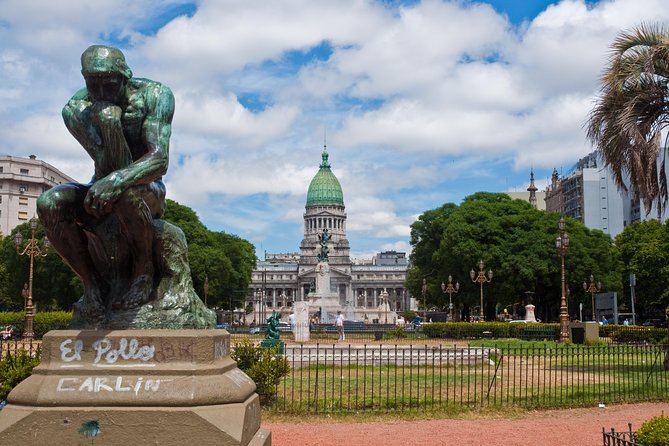
As the walk reaches Recoleta, the streets become known for Paris-style townhouses, former palaces and upscale boutiques. Avenida Alvear is the grand finale of the architectural stroll, with mansions that recall the wealth and confidence of Argentina’s late 19th- and early 20th-century elite. The guide also returns to immigration and the country’s rise and fall during those decades.
The Basilica de Nuestra Señora del Pilar is a change of pace from the palaces. Completed in 1732 as part of a Franciscan monastery, it is the second-oldest church in Buenos Aires. Admission is included, and the planned 10-minute visit gives you a chance to see a colonial-era building within a neighborhood otherwise associated with grand residences and polished storefronts.
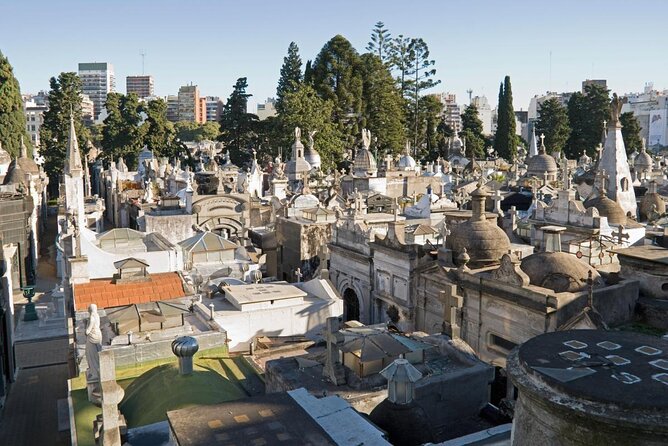
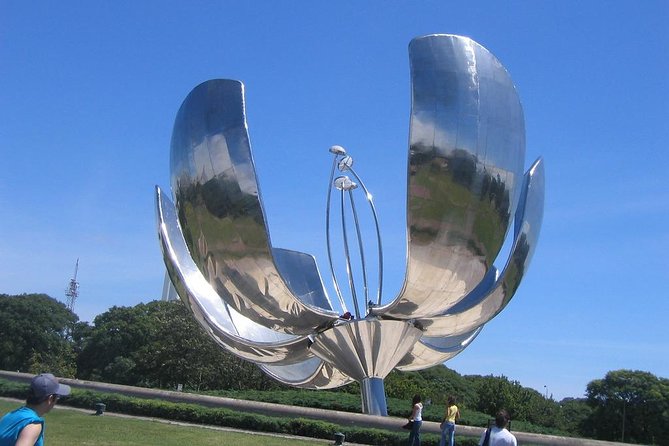
The route also covers nearby cultural landmarks, including the old monastery and cultural center, Bourdelle’s monument to Alvear, Palais de Glace and the National Fine Arts Museum. The guide connects these places to tango, immigration and the port city’s growth. The itinerary also names the National Library, the Monument to France and Argentina, and the giant flower sculpture, though the full route depends on the day’s timing and circumstances.
Recoleta Cemetery is the longest stop
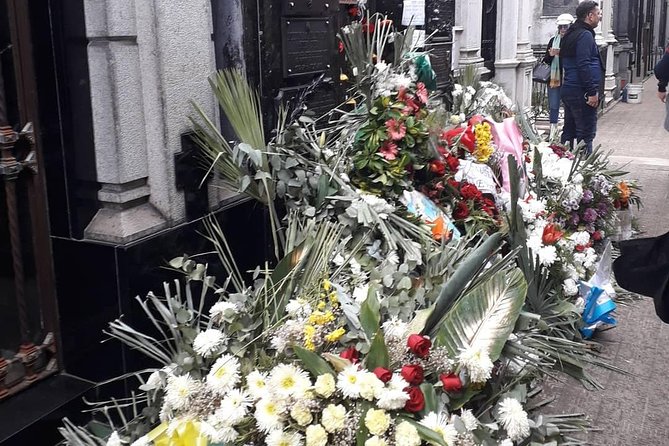
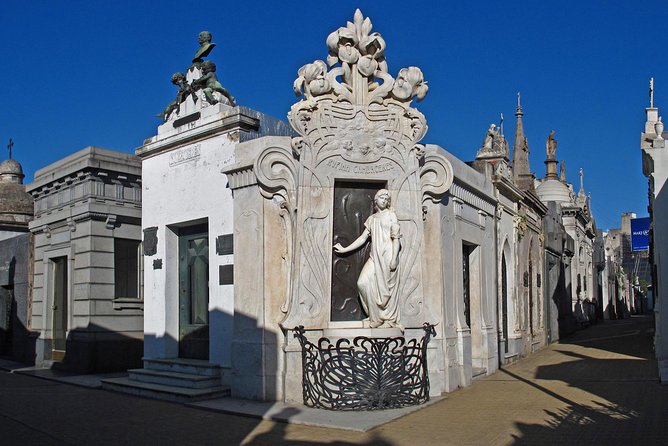
The cemetery visit is scheduled for about an hour, and admission is included. This is not just a quick walk to one famous tomb. The guide plans to tell stories about Evita Perón and her memorial, as well as Rufina Cambaceres, Admiral Brown, the Leloir family and other figures buried here.
The cemetery’s history and personalities give the walk a fitting close. Its tombs show how Argentina’s prominent families chose to be remembered, while stories of individual lives make the place more than a collection of elaborate monuments. If you have a particular person or family you want to hear about, ask your guide; the route covers a lot, and the actual visit can change with timing.
After the cemetery, the group ends outside La Biela, a landmark cafe on Avenida Presidente Manuel Quintana. The guide explains the neighborhood and nearby sights, then leaves you there to decide what to do next. This is a practical finish: Recoleta has restaurants and attractions nearby, but the tour does not include a hotel drop-off or a return ride.
What the price buys, and what to weigh
At $109 per person, this is not a budget group walk. Its value rests on having a private guide for a route that covers more than one neighborhood, a wide range of architecture and a cemetery admission ticket. For two people, the listed price comes to $218; a larger private group can make the per-person cost feel easier to justify, though the charge remains per person.
The guide is the main reason to choose this over wandering with a map. Past accounts describe guides who explained local history in fluent English, added humor and cultural context, and made the buildings easier to understand. Martin, Mariano and Carlos are names associated with earlier tours, but there is no promise of a particular guide. One caution to keep in mind: a guide style may not suit everyone. If you want to focus on questions or linger on a subject, say so early.
Plan for a steady walk, not a seated sightseeing tour. The stated duration is about three hours, while the tour description also calls it a 2.5-hour walk. Stops are short, and the route covers considerable ground from downtown to Recoleta. Wear comfortable shoes and bring what you need for the weather; the tour runs rain or shine. Meals, hotel pickup and drop-off are not included.
The schedule includes a broad list of places, but the guide may need to adjust for weather, demonstrations, strikes, repairs or other city conditions. That matters most if there is one specific stop you consider essential. The cemetery is part of the planned route and its ticket is included, but coverage of every named sight is not guaranteed.
Should you book this Buenos Aires walk?
Book it if you want a guided introduction that links architecture with Argentina’s politics, immigration and social history, and you’re comfortable spending a few hours on foot. The private format suits couples, families or friends who want to ask questions without keeping pace with a large group. Children aged 8 and under can join free with an adult.
Skip it if you want a slow, unstructured visit to each building or need a ride back to your hotel. For a first visit, the route offers an efficient way to see central Buenos Aires and Recoleta through one connected story. Just arrive before 10 a.m., wear good walking shoes, and keep some time afterward to explore around La Biela.
FAQ
How long does the tour last?
The tour is described as approximately three hours, while its walking description gives a duration of 2.5 hours. Plan for a substantial walk and allow some flexibility.
Where does the tour start?
It starts outside Florida Garden at Florida 899, on the corner with Paraguay Street. Look for a guide with a small BA Walking Tours sign.
What time should I arrive?
The meeting instructions say to arrive no later than 10 a.m.
Where does the tour end?
It ends outside La Biela cafe in Recoleta, at Avenida Presidente Manuel Quintana 596.
Is Recoleta Cemetery admission included?
Yes. The cemetery admission ticket is included, and the planned visit is about one hour.
Is the tour private?
Yes. Only your group participates.
Does the tour operate in bad weather?
Yes. It operates rain or shine, though weather and other city conditions can affect which parts of the route are covered.
Are meals or hotel transportation included?
No. Meals, hotel pickup and drop-off are not included.
Just added in Buenos Aires
- Tango Show at El Querandi with optional Dinner★ 4.2 · 3 reviews
- Wine Tasting in Buenos Aires★ 4.2 · 4 reviews
- Walking Tour: Buenos Aires bookstores★ 4.3 · 12 reviews
- Velez Sarsfield Football Match★ 5.0 · 3 reviews
- Private Underground Tango Immersion★ 5.0 · 31 reviews
- Tour Buenos Aires in one day on Electric Scooters★ 5.0 · 33 reviews
- Transfers from or to the airport In Argentina Your Best Choice★ 5.0 · 28 reviews
- Rojo Tango Show: Skip the Line Ticket including Private Transfer★ 4.5 · 40 reviews
Buenos Aires Walking Tours, compared.
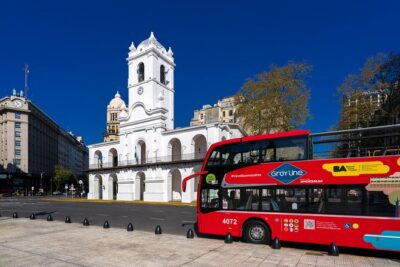
Buenos Aires Hop-On Hop-Off Bus, Free Walking Tours & Discounts
Read our review →
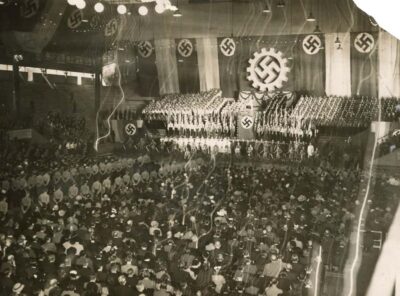
Nazis in Buenos Aires: a historical walking tour
Read our review →
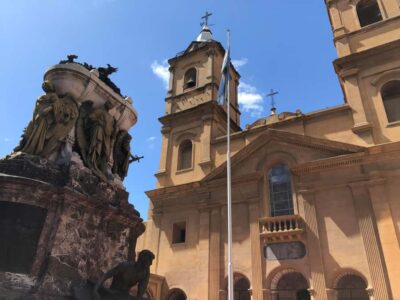
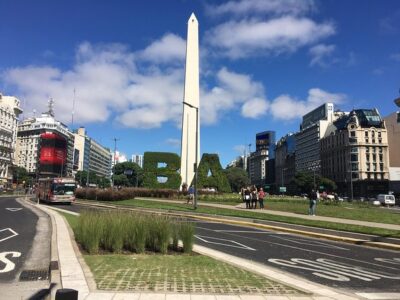
Buenos Aires Walking Tour with Local Guide and Optional Rooftop
Read our review →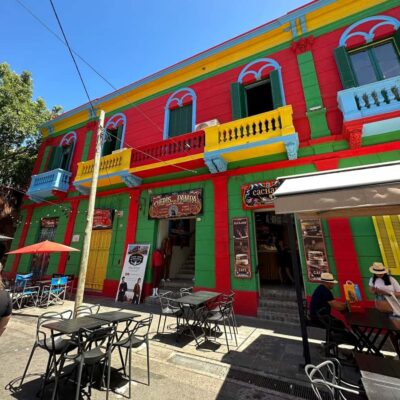
Full Day Private Walking Tour of Buenos Aires Neighborhoods
Read our review →Browse the lists this tour appears in