
Reviewed · BUENOS AIRES COOKING CLASSES
BA: Empanadas and Alfajores Cooking Experience in Palermo
Empanadas are more than tidy parcels of pastry here: their shape can identify what is tucked inside. In this 2.5-hour Palermo class, you prepare empanadas and alfajores with a local host, then eat what you have made.
I like the small group, capped at 10, which leaves room to ask questions and try the folding yourself. I also like that you make both a savory staple and a dulce de leche cookie, with meat and vegan filling options.
One consideration: hands-on time can vary. Some sessions involve plenty of chopping and shaping, while others rely more on prepared shells and ingredients. If you want a full scratch-cooking course, this may feel lighter than expected.
- Two Argentine staples: Prepare empanadas, then assemble alfajores filled with dulce de leche.
- Meat or vegan filling: The class offers both; a lentil option has been used for vegan participants.
- Small group: No more than 10 people, a useful size for cooking and conversation.
- Local context: Hosts share food traditions and stories alongside the recipes.
- Mate is included: The class lists Argentina’s traditional infusion, with coffee or tea also included.
- Palermo address: Meet at Gorriti 4882; the activity returns to the same location.
A Palermo kitchen, not another sightseeing stop
This class offers a different way to spend part of a Buenos Aires day. Rather than moving from one landmark to the next, you stay in one place, work with food and hear about the customs connected to it. That makes the session especially useful if you want an activity that brings local culture into focus without requiring a full day or a long journey.
The meeting point is Gorriti 4882, in Palermo. The address is near public transportation, but transportation to and from the class is not included. Plan your route before you set out, especially if you are fitting the class between other plans.
The group size is limited to 10. In a cooking class, that matters: a smaller table generally gives you a better chance to handle ingredients, ask for help with a fold and join the conversation. It also means the session can feel social without becoming a crowd around the counter.
Starting with empanadas and their folds
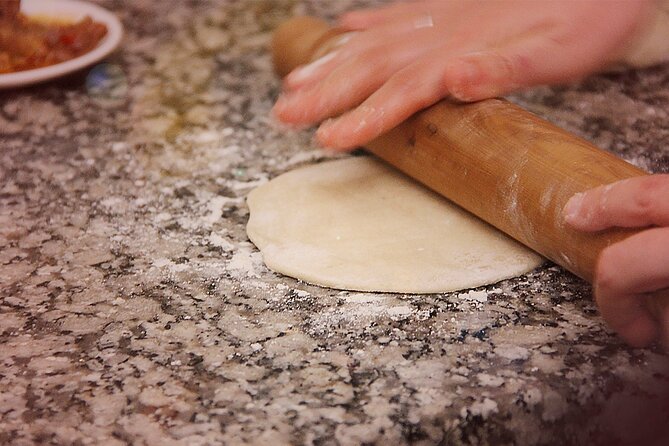
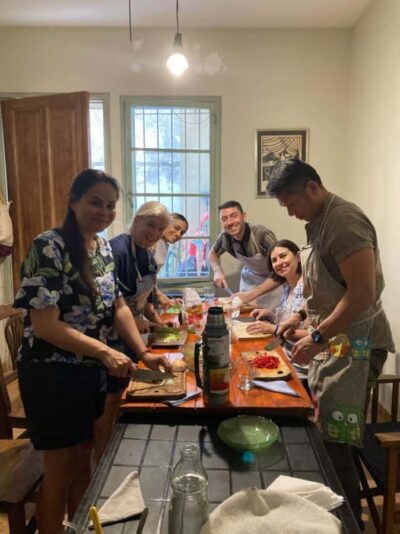
Empanadas are the first project. Your host guides you through preparing the filling and assembling the pastries, with meat and vegan options available. One vegan filling used in a class was lentil, so this is a practical choice if your group has different diets. It is still wise to confirm your needs when booking, since the available options may depend on the session.
The folding is a small lesson with a lot of meaning. These pastries are not simply filled and sealed at random: participants learn that different fillings can have different shapes. That detail turns a basic cooking task into a way of reading the food. You are not only trying to close the dough neatly; you are learning a convention that can help distinguish one empanada from another.
The amount of hands-on work may vary. Some sessions have included chopping meat and vegetables, cooking the filling on the stove, rolling dough and stuffing the empanadas. In other sessions, prepared shells have been used, with participants concentrating on filling and shaping. Expect to take part, but do not assume every ingredient or pastry will be made entirely from scratch.
That variation is worth keeping in mind if you are booking for a keen home cook who wants detailed technique practice. For a beginner, or for someone who would rather learn a few useful steps than spend an afternoon at the stove, the lighter format can be an advantage. You can contribute as much as you like, but the class is not guaranteed to give every person equal time at every task.
More Palermo tours in Buenos Aires:
- Palermo: Graffiti and Street Art Guided Tour in English
★ 4.8 · 684 reviews - Buenos Aires: Empanada & Alfajor Cooking Lesson in Palermo
★ 4.6 · 186 reviews - Buenos Aires Bike Tour: North Districts, Recoleta and Palermo
★ 4.5 · 91 reviews
Making alfajores while the filling cools
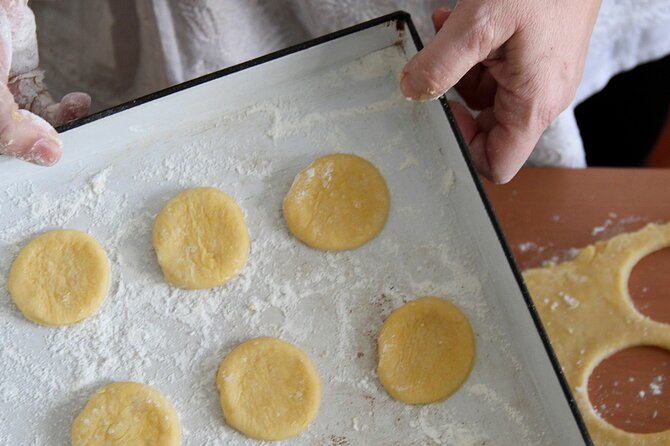
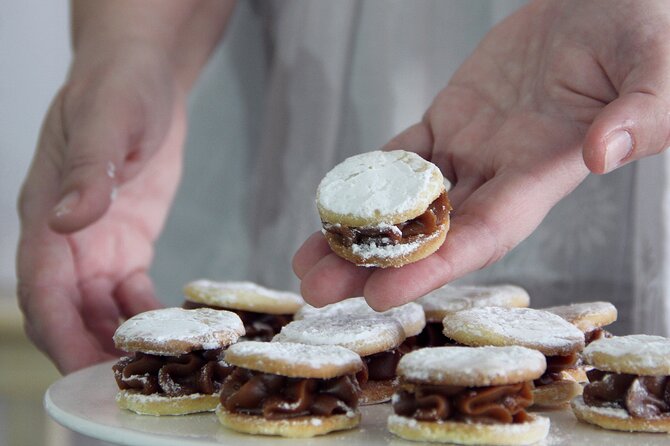
After the savory work, the class turns to alfajores, Argentina’s well-known cookies filled with dulce de leche. You mix, bake and assemble the treats with guidance from your host. In some sessions, the cookies are prepared or supplied before the group adds the dulce de leche and finishes them with coconut. The sequence can make good use of the time while empanada filling cools.
The final assembly is simple, but it rewards a gentle hand. The cookies can be fragile, so avoid pressing hard when you spread the filling or join the halves. That is a useful detail to know before you start, particularly if children are eager to make their own shapes or decorations.
The pairing of savory pastry and sweet biscuits makes the class feel like more than a single-recipe demonstration. You come away having handled two familiar parts of Argentine food culture, and the change of pace helps keep the session lively. For families, the alfajores can be an especially appealing part: shaping and decorating offers a creative task alongside the more precise empanada folds.
The stories around the kitchen table
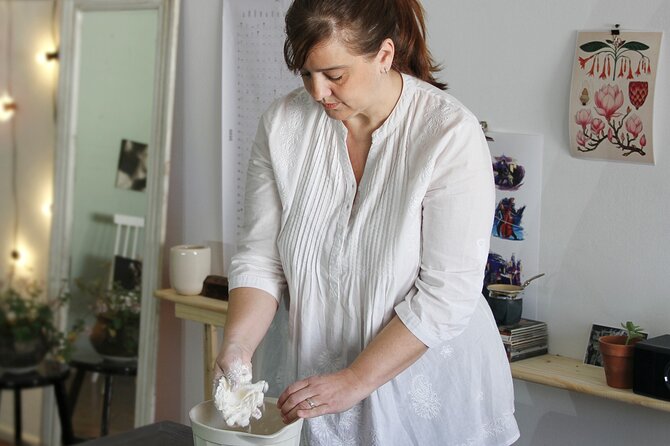
Food is the main event, but conversation gives the cooking its local frame. Hosts explain the origins and traditions connected to the dishes, and some have shared personal memories of learning recipes in a grandmother’s kitchen. Those stories help explain why a particular method matters, rather than leaving you with a recipe and no sense of where it belongs.
The host is described as a professional local guide. Past sessions have been led by people including Tomas, Carolina, Catalina and Valentino, though you should not expect a particular person unless the provider confirms it. The strongest classes are those where the instructor stays patient, explains each step clearly and makes room for questions. The experience can be less satisfying if the host does most of the work or provides little context, so the level of participation depends partly on how the session is run.
Conversation with the other people at the table is part of the appeal. The group limit creates a natural setting for swapping travel tips and comparing food traditions, without turning the class into a formal lecture. If you are traveling alone, this gives you an easy way to spend a relaxed afternoon with others. If you are with family or friends, the shared tasks offer something to do together beyond simply ordering a meal.
Mate, tea and what is served
Mate is listed as the included drink, along with coffee and/or tea. It is a traditional Argentine infusion and a fitting companion to a class built around local food customs. Some past sessions have also included wine, but the stated inclusion is mate, coffee and/or tea, so treat wine as a possible extra rather than a promised part of the experience.
The food and drink are consumed as part of the class, but this is not best approached as a substitute for a full restaurant meal unless you know how much you will make. Portions and session details can vary. You should also tell the host about dietary needs before the class rather than relying on an option being available on the day.
More cooking classes in Buenos Aires:
- Buenos Aires: Empanadas and Alfajores Guided Cooking Class
★ 4.8 · 486 reviews - Argentinian Empanadas Cooking Experience in Palermo, Bs As
★ 4.8 · 50 reviews - Private Argentine Cooking Class and Tango Lesson in Buenos Aires
★ 5.0 · 37 reviews - Premium Empanadas Cooking Class & Wine Tasting Experience
★ 4.9 · 35 reviews
Is $49 a fair price?
At $49 per person for about two and a half hours, the value rests on more than the ingredients. You are paying for guided preparation of two dishes, the cooking tools and ingredients, a small-group format, and the chance to ask about Argentine food while you work. If you take home recipes, as some participants have, the class can keep paying off after your trip.
For a visitor who would otherwise spend those hours at a café or simply watching a cooking demonstration, the chance to shape and taste the food makes the price reasonable. It is also a compact activity: no transport between stops, no full-day commitment, and an easy fit into a Palermo itinerary. The class ends where it begins, which keeps the logistics straightforward.
Value depends on what you want from a cooking class. If you expect a technical course with every dough and filling made from the ground up, the use of prepared shells in some sessions may disappoint. If you want approachable instruction, a local perspective and a meal you have helped make, the price is easier to justify.
The class is often booked about 37 days ahead on average. That is a useful cue to reserve early if your dates are fixed, particularly if you are traveling as a family or want to join a small group on a specific day. Free cancellation is available up to 24 hours before the start time. Cancellations or changes inside that 24-hour window are not accepted for a refund.
Bringing children and choosing your level of involvement
The activity is presented as suitable for families, and children have enjoyed the food preparation and making different alfajor shapes. It can be a good way to introduce younger family members to unfamiliar flavors while giving them a real task at the table. The class is not exclusively for children, so adults should expect to share the space and cooking time with other participants.
There is one practical safety point: chopping may involve sharp knives. Children who are not ready to handle a knife safely will need adult help. Some parts of the cooking may also be more demonstration than action, so do not promise young cooks that they will be chopping or shaping every item themselves.
Beginners are well suited to the class. The steps are described as approachable, and a patient host can make it easier to learn the folds and assembly without feeling rushed. Experienced cooks may still enjoy the cultural details and the chance to compare recipes, but should book for the company and context as much as for advanced technique.
What to know before you book
The class lasts approximately 2 hours and 30 minutes and begins at Gorriti 4882, C1414BJN, in Buenos Aires. It ends at the same meeting point. Public transportation is nearby, but transportation is not part of the price, and tips are not included.
Ingredients for the empanadas and alfajores, cooking tools, a professional local host, and mate, coffee and/or tea are included. Meat and vegan options are available. The maximum group size is 10. Confirmation is provided at booking, and the cancellation deadline is 24 hours before the scheduled start.
If you have a strict dietary requirement, ask about the filling before you book. The class specifically offers meat and vegan choices, but the available recipe details may vary. And if your main goal is to make everything from scratch, ask what that particular session involves; the amount of direct cooking has not been identical every time.
Should you book this Palermo cooking class?
Book it if you want a friendly, practical introduction to Argentine food, enjoy learning by doing and would value conversation alongside the cooking. The combination of empanadas, dulce de leche alfajores and local food traditions gives you more than a recipe demonstration, while the small group keeps the activity personal.
Think twice if you want a rigorous, fully hands-on course in which every ingredient is prepared from scratch. The participation can vary, and some sessions use prepared pastry shells. For families, solo visitors and couples who want a relaxed cultural activity with something delicious at the end, it is a good use of a Buenos Aires afternoon. Reserve ahead if your schedule is fixed, and confirm any dietary needs or expectations about the cooking format before you go.
FAQ
How long does the class last?
It lasts approximately 2 hours and 30 minutes.
Where does the class meet?
The meeting point is Gorriti 4882, C1414BJN, in Buenos Aires.
Where does the activity end?
It ends back at the meeting point.
What foods will I make?
You will prepare Argentine empanadas and dulce de leche alfajores.
Are vegan options available?
Yes. Meat and vegan options are offered. A lentil filling has been used as a vegan option.
What drinks are included?
Mate, coffee and/or tea are listed as included.
How many people can join the class?
The maximum group size is 10 people.
Is transportation included?
No. Transportation is not included, though the meeting point is near public transportation.
More food tours in Buenos Aires
- Buenos Aires: Local Foodie Adventure with Sherpa Food Tours
★ 4.9 · 670 reviews - Buenos Aires Food Tour: Local Dishes, Steak, Empanada & More
★ 5.0 · 118 reviews - San Telmo: Historical Guided Tour with Street Food & Drinks
★ 5.0 · 87 reviews - Food Tour in Buenos Aires City in Small Groups
★ 5.0 · 72 reviews
Just added in Buenos Aires
- Tango Show at El Querandi with optional Dinner★ 4.2 · 3 reviews
- Wine Tasting in Buenos Aires★ 4.2 · 4 reviews
- Walking Tour: Buenos Aires bookstores★ 4.3 · 12 reviews
- Velez Sarsfield Football Match★ 5.0 · 3 reviews
- Private Underground Tango Immersion★ 5.0 · 31 reviews
- Tour Buenos Aires in one day on Electric Scooters★ 5.0 · 33 reviews
- Transfers from or to the airport In Argentina Your Best Choice★ 5.0 · 28 reviews
- Rojo Tango Show: Skip the Line Ticket including Private Transfer★ 4.5 · 40 reviews
Buenos Aires Cooking Classes, compared.
Argentinian Empanadas Cooking Experience in Palermo, Bs As
Read our review →
Private Argentine Cooking Class and Tango Lesson in Buenos Aires
Read our review →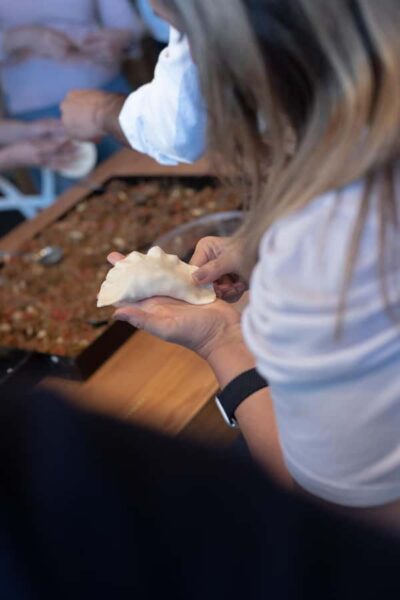
Premium Empanadas Cooking Class & Wine Tasting Experience
Read our review →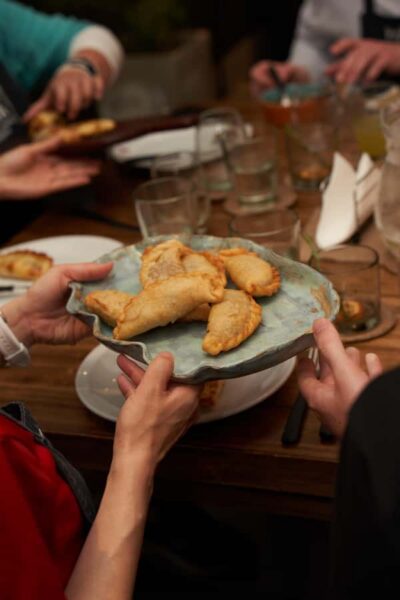
Pachamama – Argentine Cooking Experience in Buenos Aires
Read our review →Browse the lists this tour appears in