Reviewed · BUENOS AIRES TOURS
From Colonialism to Eclecticism, Buenos Aires arquitectonica
Buenos Aires’ architecture tells a story in stone and concrete. On this three-hour walk, you move from Plaza de Mayo’s colonial-era landmarks to the Brutalist Banco Hipotecario, then follow Corrientes Avenue past theaters that still draw crowds. It’s a compact way to see how different periods share the same city blocks.
I like two things in particular: the route links well-known sights with buildings you might otherwise pass without noticing, and guides Juan and Loli bring architecture together with local culture, including a mate tasting. The small group, capped at four, also gives you room to ask questions and shape the conversation around your interests.
One point to check before booking: the route description finishes at Teatro Colón, while the activity details say the tour ends back at the meeting point in Plaza de Mayo. The theater’s interior visit is optional and costs extra, so confirm the finish and any plans to go inside with the operator.
- Architecture beyond the postcard stops: Compare colonial facades, a Brutalist bank, theaters, and major civic buildings in one walk.
- A small group of no more than four: You have a better chance to ask questions and tailor the discussion to your interests.
- Mate is part of the tour: Learn about the drink’s place in Argentine culture while tasting it.
- A central Buenos Aires route: The walk connects Plaza de Mayo, the CCK, the Obelisk, Plaza Lavalle, and Teatro Colón.
- Plan for a three-hour walk: Wear comfortable shoes and bring sun protection; lunch and theater admission are not included.
From Plaza de Mayo into the city’s architectural mix
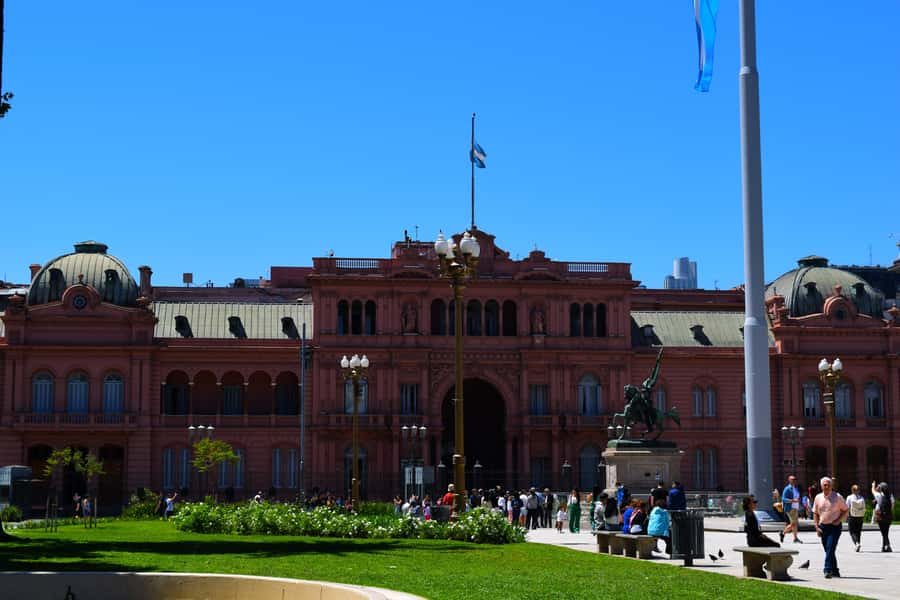
The tour begins at Bolívar 65, at the intersection of Bolívar and Avenida de Mayo in Plaza de Mayo. This is a useful starting point because the square gathers several of Argentina’s most recognizable political and religious buildings in one place.
You’ll see the Cabildo, the Metropolitan Cathedral, Casa Rosada, and Banco Nación. Rather than treating them as a checklist of famous facades, the walk uses them to introduce the city’s architectural layers and the role these buildings play in public life.
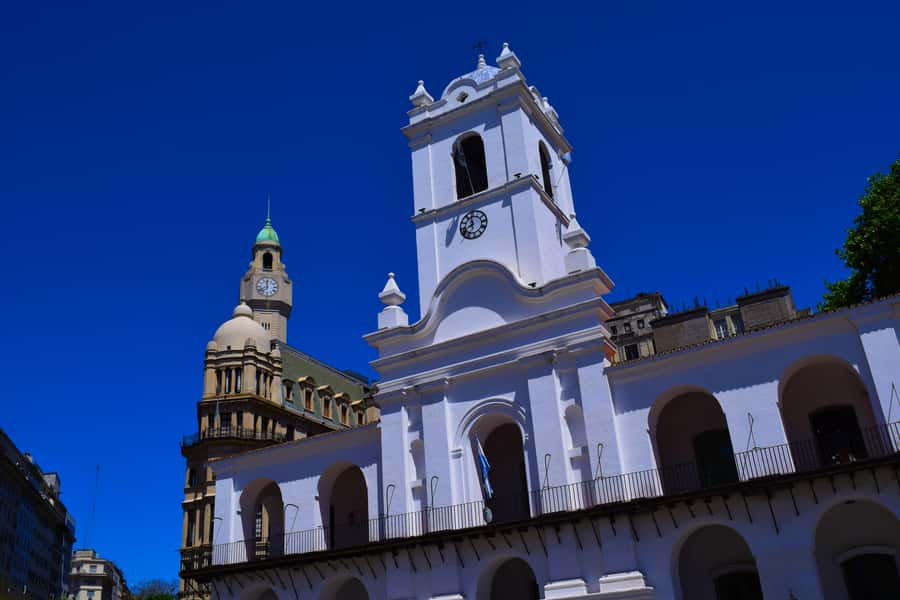
The Cabildo is a natural starting point for the colonial period, while the Cathedral and Casa Rosada help show how the square’s buildings differ in purpose and appearance. Your guide can connect the details you see on the facades to the wider story of Buenos Aires, so bring questions if you’re curious about a particular style or building.
This first section also sets the tone for the tour: it is not only about looking up at architecture. Juan and Loli also share cultural stories and details about the city that help explain why its buildings matter to people who live here.
Reconquista Street and the Banco Hipotecario
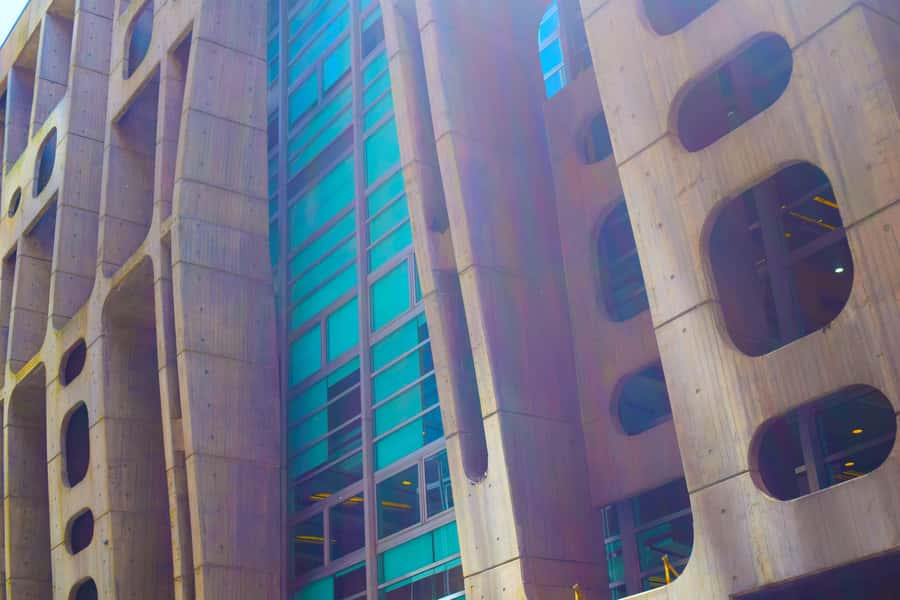
From the square, the route heads north along Reconquista Street toward Banco Hipotecario. Its Brutalist facade makes a sharp change from the more familiar civic buildings around Plaza de Mayo, and gives you a chance to consider how much variety fits into Microcentro.
This is one of the tour’s most distinctive stops. Banco Hipotecario is not one of the usual first sights people seek out in Buenos Aires, but its strong modern design helps make the walk more than a parade of grand historic facades. If you enjoy architecture, this contrast is a good reason to choose this route over a tour focused only on the standard landmarks.
Microcentro brings together work by architects from different periods and styles. The guides can point out features and share details about the buildings and their designers, giving you a framework for noticing what you might otherwise walk past.
The route is also customizable to your interests. If you’d rather spend more time discussing a particular building or architectural style, say so early in the walk. The group limit of four makes that kind of conversation more practical than it would be in a large tour.
More tours in Buenos Aires:
- Buenos Aires Hop-On Hop-Off Bus, Free Walking Tours & Discounts
★ 4.5 · 2,218 reviews - Buenos Aires: Piazzolla Tango Show with Optional Dinner
★ 4.4 · 2,122 reviews - Buenos Aires: City Highlights Guided Tour with Transfer
★ 4.7 · 1,946 reviews
The CCK and the former Post and Telegraph Palace
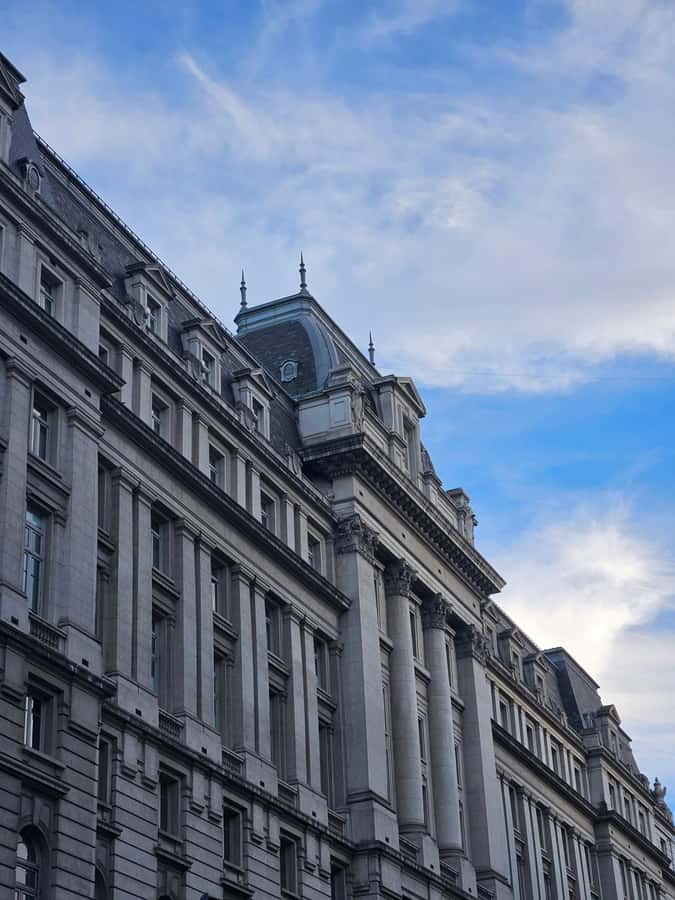
Next comes the CCK, formerly the Palacio de Correos y Telégrafos, or Post and Telegraph Palace. The tour pauses outside to look at its facade and hear about its history, rather than including an interior visit.
That distinction matters if you’re hoping to explore inside. This walk is designed around the city’s buildings as seen from the street, with the guide providing context as you go. You’ll get an introduction to the former palace’s story and architecture, but the available information does not include an interior tour of the CCK.
The stop also keeps the route moving through the city’s changing styles. After seeing a Brutalist bank and earlier civic buildings, the former communications palace offers another chance to compare how Buenos Aires has presented its public institutions across different periods.
Corrientes Avenue, the Gran Rex, and the Ópera
The walk continues up Corrientes Avenue, a major center of Buenos Aires nightlife and culture. You’ll pass the Gran Rex and the Ópera, two theaters that remain important gathering places and performance venues.
These are especially useful stops if you want to understand the city beyond its government buildings. The theaters bring a different purpose and mood to the architectural story: here, the focus is entertainment, public life, and the avenue’s enduring place in the city’s cultural routine.
The guides can add details about the theaters’ designs and their periods of prominence. That mix of architecture and local context is a strength of the tour. You’re not just asked to admire a facade; you learn how the building fits into a larger story about Buenos Aires.
Corrientes is also one of the route’s livelier stretches, so expect the feel of a working city rather than a quiet museum district. The stop is primarily about seeing the buildings from outside, not attending a performance.
The Obelisk and a view over two major avenues
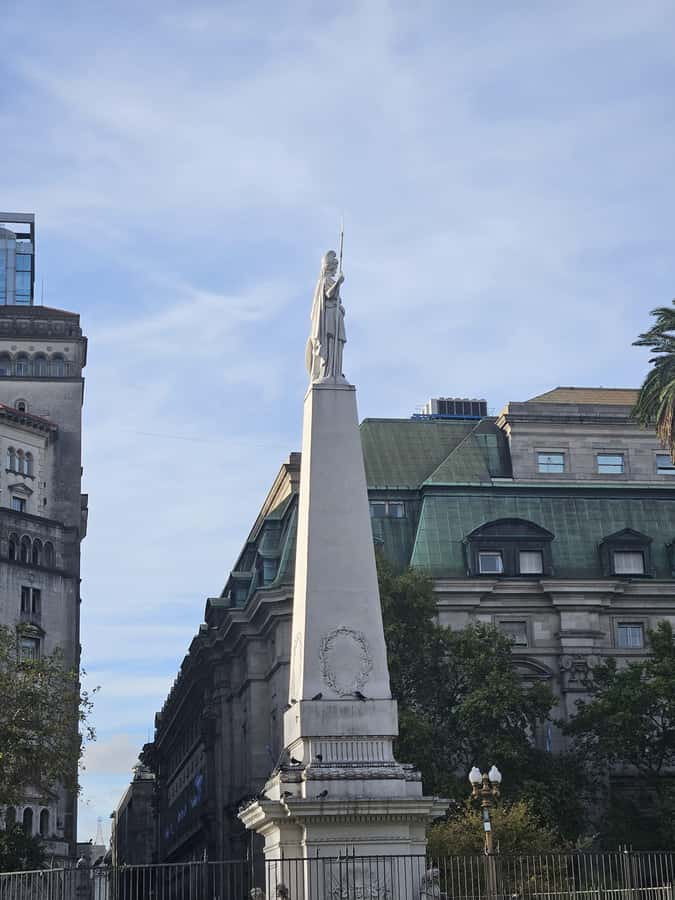
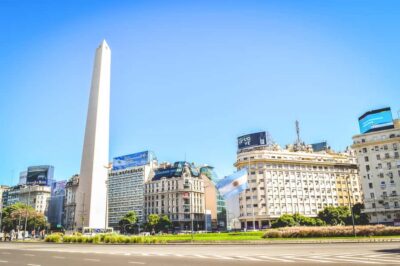
The first portion of the route reaches the Obelisk and Plaza de la República. The Obelisk is a major symbol of Buenos Aires, and the guide explains its importance to the country’s political and social life.
You’ll then continue along Diagonal Norte and pause at the Obelisk staircase, a panoramic point overlooking the busy meeting of Avenida 9 de Julio and Corrientes. This is a good moment to take in the scale of the streets after spending time close to individual facades.
The photo stop gives you a visual break, but it is still part of a walking tour with a focus on buildings and city history. If you like taking pictures, keep your camera or phone handy. The stop is brief, so it’s worth being ready rather than searching through your bag once you arrive.
Or spend the day another way:
- Buenos Aires: Hop-On Hop-Off City Bus Tour
★ 4.2 · 1,855 reviews - Buenos Aires Hop-On Hop-Off Bus and Exclusive Benefits
★ 4.4 · 1,714 reviews - Buenos Aires: La Boca Guided Walking Tour in English
★ 4.8 · 1,587 reviews - Buenos Aires: La Recoleta Cemetery Guided Tour in English
★ 4.8 · 1,359 reviews
Plaza Lavalle, mate, and Teatro Colón
The final portion described for the tour takes you to Plaza Lavalle. Here, you’ll see the Courts Palace and, across from it, the Julio Argentino Roca School. Their placement makes this a useful stop for comparing two prominent public buildings in the same urban setting.
The walk also includes a mate tasting, with an explanation of the drink’s place in Argentine culture. This is more than a quick refreshment: mate is a social tradition, and the tasting gives the guide a natural way to talk about daily life beyond architecture.
Water and a traditional Argentine snack are included as well. One tasting experience described by a participant included typical cookies alongside mate. The tour does not include lunch, so treat the snack as a small extra rather than a meal, especially if you’re walking at lunchtime.
The route is described as finishing at Teatro Colón, with the option to stay and take a guided visit inside. Admission to the theater is not included. Because the activity details also say the tour ends back at the Plaza de Mayo meeting point, confirm the actual end point before you make plans around the theater visit.
What the guides add to the walk
Juan and Loli are central to the experience. They bring different kinds of context to the route: Juan is described as having a strong command of the architects and periods behind the buildings, while Loli adds stories connected to South America and local culture.
That balance suits the tour’s subject. Architecture can become a string of dates and names if it is not tied to how a city works and what its buildings mean. Here, the conversation moves between design, history, and customs such as mate, which helps make the walk useful even if you are not an architecture specialist.
The guides are also described as friendly and open to questions. With a group limited to four, you can ask about details that catch your eye rather than having to keep pace with a large crowd. The route can be adjusted to your tastes and interests, so it’s worth telling the guides what you most want to understand.
The strongest reason to book is this combination of architectural detail and personal cultural context. If you want only a quick overview of famous landmarks, a more general city tour may be enough. If you like learning how design choices and local customs shape a place, this walk offers more to chew on.
Is $25 a good value?
At $25 per person, the price covers three hours with an English- or Spanish-speaking guide, water, a traditional snack, and a mate tasting. The group limit of four adds value if you prefer a conversational walk and the chance to ask questions without competing for the guide’s attention.
The route also covers several central landmarks and less familiar buildings in one outing. That makes the price easier to justify if architecture is a real interest, or if you want a city introduction with a clear theme rather than a broad survey of every attraction.
There are extra costs to keep in mind. Lunch is not included, and neither is entry to Teatro Colón. The interior visit is optional, so decide in advance if you want to add it and confirm how it fits with the tour’s end point.
The three-hour duration is long enough to cover a varied set of buildings, but it is still a walking experience. Comfortable shoes, comfortable clothes, sunglasses, a hat, and sunscreen are recommended. Starting times vary, so check availability when choosing a date.
Who should book this Buenos Aires walk?
I’d recommend this tour if you enjoy architecture, want to see central Buenos Aires through its buildings, or value local stories alongside historical context. It’s especially suited to people who prefer small groups and like being able to ask questions or focus on particular interests.
It may be less suitable if you want to spend substantial time inside buildings, need a seated tour, or are looking for a meal as part of the experience. The main focus is on exterior architecture and walking, with the theater visit available separately.
Before booking, check the meeting and finishing arrangements, particularly if you intend to stay for Teatro Colón. If the route and outdoor focus suit you, this is a thoughtful way to connect the city’s colonial, modern, and cultural landmarks, with mate offering a welcome introduction to local tradition.
FAQ
How long is the tour?
The tour lasts three hours. Starting times vary, so check availability for your chosen date.
Where does the tour start?
It starts at Bolívar 65, at the intersection of Bolívar and Avenida de Mayo in Plaza de Mayo.
Where does the tour finish?
The route description finishes at Teatro Colón, but the activity details say it ends back at the Plaza de Mayo meeting point. Confirm the end point with the operator before booking plans around the theater.
What languages are available?
The live guide is available in English and Spanish.
How many people are in the group?
The group is limited to four participants.
Is a visit inside Teatro Colón included?
No. Entry to Teatro Colón is not included. The route offers the option to stay for a guided interior visit, but that visit is separate.
What is included in the price?
The tour includes an English- or Spanish-speaking guide, water, a traditional Argentine snack, and a mate tasting.
What should I bring?
Wear comfortable shoes and comfortable clothes. Sunglasses, a hat, and sunscreen are also recommended.
Just added in Buenos Aires
- Tango Show at El Querandi with optional Dinner★ 4.2 · 3 reviews
- Wine Tasting in Buenos Aires★ 4.2 · 4 reviews
- Walking Tour: Buenos Aires bookstores★ 4.3 · 12 reviews
- Velez Sarsfield Football Match★ 5.0 · 3 reviews
- Private Underground Tango Immersion★ 5.0 · 31 reviews
- Transfers from or to the airport In Argentina Your Best Choice★ 5.0 · 28 reviews
- Tour Buenos Aires in one day on Electric Scooters★ 5.0 · 33 reviews
- Rojo Tango Show: Skip the Line Ticket including Private Transfer★ 4.5 · 40 reviews
Buenos Aires Tours, compared.
Buenos Aires Hop-On Hop-Off Bus, Free Walking Tours & Discounts
Read our review →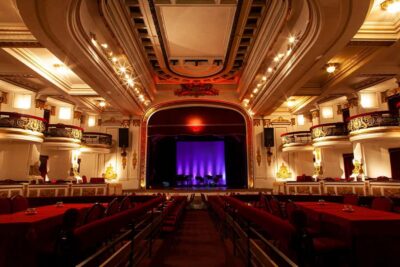
Buenos Aires Hop-On Hop-Off Bus and Exclusive Benefits
Read our review →