
Reviewed · LA BOCA TOURS
La Boca Out off the Beaten Track
La Boca’s best stories are not all painted in bright colors along Caminito. This 2.5-hour walk with Paola De Luca takes you to immigrant-era buildings, neighborhood murals and a typical house, with the local perspective of someone who grew up here.
I like two things in particular: the chance to enter a conventillo and Argentina’s first volunteer fire station, and the coffee stop at a notable café dating to 1882. One consideration: the tour finishes at Caminito, but you should not expect every stop to be a quiet backstreet. The route also includes familiar icons such as Boca Juniors Stadium, viewed from outside.
What Makes This La Boca Walk Different
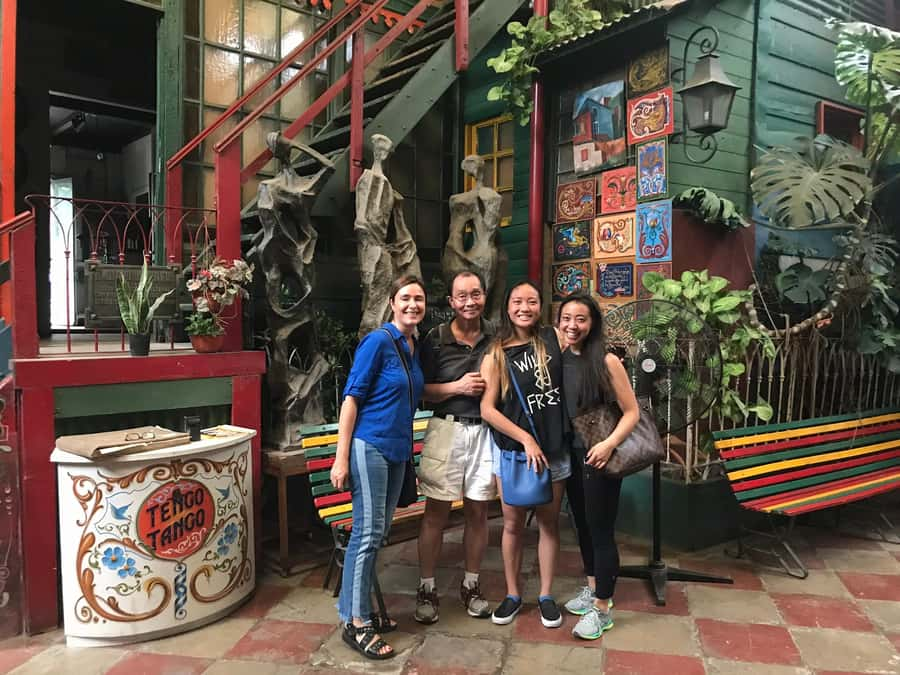
- A local guide with roots here: Paola spent her childhood and youth as a neighbor of La Boca, giving the walk a personal frame for its history.
- A conventillo from the inside: See a corrugated-metal tenement house that once sheltered immigrants and now houses a cultural center.
- Argentina’s first volunteer fire station: The visit connects La Boca’s immigrant story with the neighborhood’s tradition of mutual aid.
- Murals with a message: The large paintings are not just colorful backdrops; they reflect social issues and local identity.
- A proper old café stop: Coffee is included at a notable café dating to 1882.
- A small group: With a limit of 10 participants, there is room to ask questions and follow the story at a human pace.
La Boca Beyond the Postcard
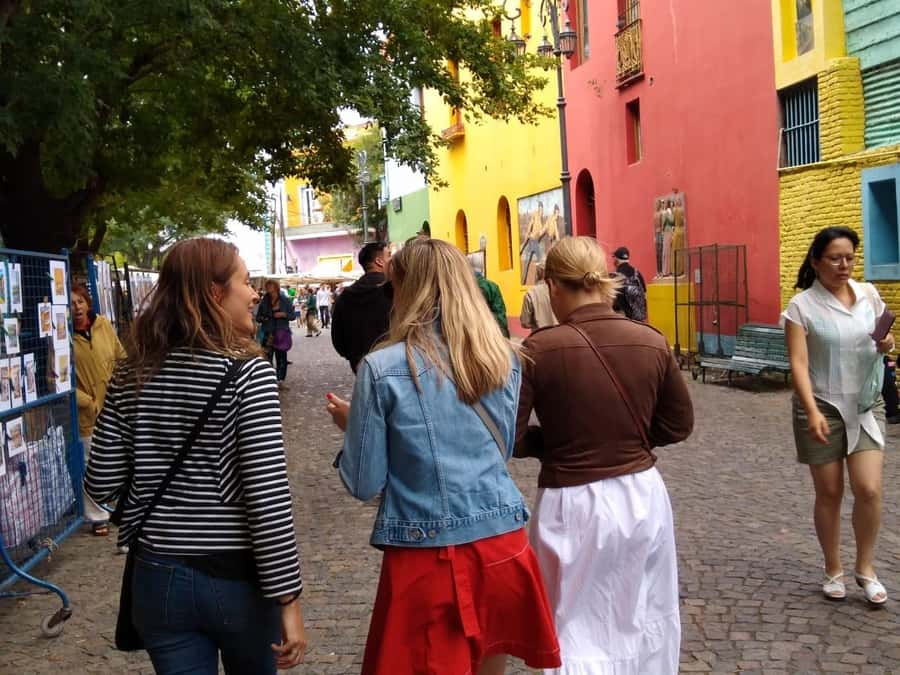
La Boca is often introduced through its brightest and most photographed streets. This walk widens the picture. You begin near the harbor, then see how warehouses, a train station, old community buildings, churches, football and public art fit into the story of a working-class neighborhood shaped by immigration.
That broader view matters. A bright-painted street can be fun to photograph, but color alone does not explain why La Boca looks and feels the way it does. Paola’s personal connection gives the walk a useful thread: she can relate the local streets and customs to the history behind them, rather than treating the neighborhood as a string of photo stops.
The experience starts at the corner of Avenida Don Pedro de Mendoza and Martín Rodríguez and ends at Caminito. It is advertised as 150 minutes, with a small group of no more than 10. That is a practical balance: long enough to cover several kinds of places, but not an all-day commitment.
More La Boca tours in Buenos Aires:
- Buenos Aires: La Boca Guided Walking Tour in English
★ 4.8 · 1,587 reviews - Buenos Aires: Tickets to Boca Juniors Museum & Stadium
★ 4.5 · 581 reviews - Buenos Aires: Navigation from Pto. Madero to La Boca
★ 4.1 · 147 reviews
Harbor, Warehouses and the Immigrant Arrival
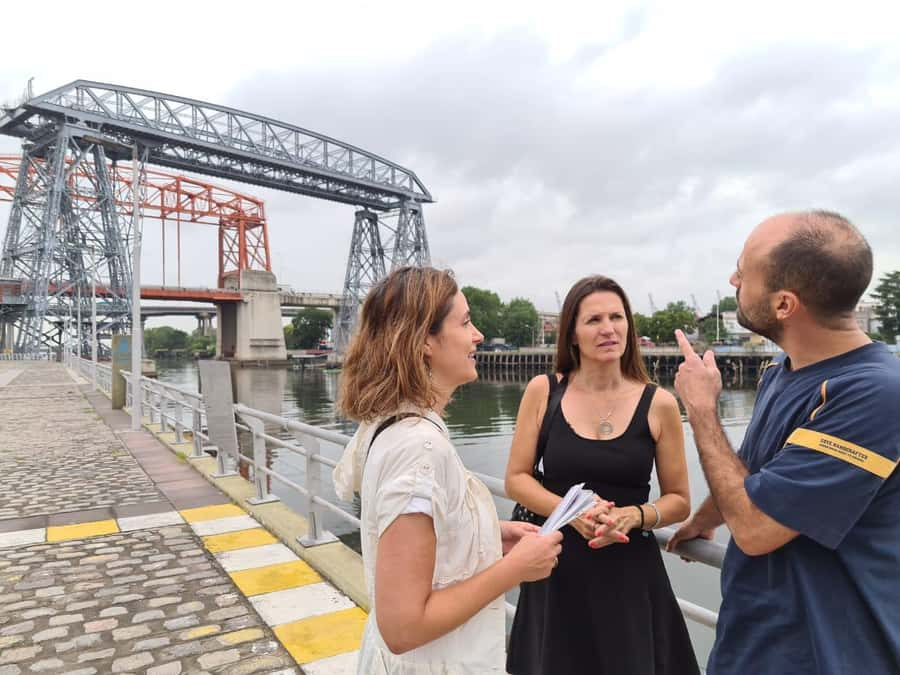
The opening stretch takes in La Boca’s harbor, warehouses and picturesque train station. The station is tied to the arrival of large numbers of immigrants, making it a fitting place to begin a walk about the people and institutions that shaped the neighborhood.
These are useful stops for orientation. Instead of treating La Boca as a self-contained attraction, you can see its connection to movement, work and arrival. The harbor and warehouses help set the scene for a district whose history is closely tied to immigrant communities.
Paola’s childhood in La Boca is a particular asset here. The point is not simply to collect dates, but to hear how the neighborhood’s history connects to local identity. Visitors have praised her way of linking personal recollection with broader context, and her English has also been described as strong. If you have questions about the area, this is a good point to ask them.
Inside a Corrugated-Metal Conventillo
One of the most distinctive stops is a conventillo, a tenement house clad in corrugated metal. These buildings once provided shelter to immigrants; this one now serves as a cultural center. Seeing the interior makes the history more tangible than viewing an old façade from the pavement.
The visit also helps explain how housing and community life overlapped. A conventillo was not just an architectural type; it was part of the way newcomers found a place to live in a city they were still learning. The cultural center’s present use adds another layer, showing how a building associated with earlier residents can continue to serve the neighborhood.
The tour also includes a visit to a typical Boca house belonging to friends of Paola who are local artists. That personal connection is part of what makes the experience feel less like a standard sightseeing circuit. You get a glimpse of a place tied to real people and their work, rather than only encountering La Boca through public attractions.
The Fire Station and a Tradition of Mutual Aid
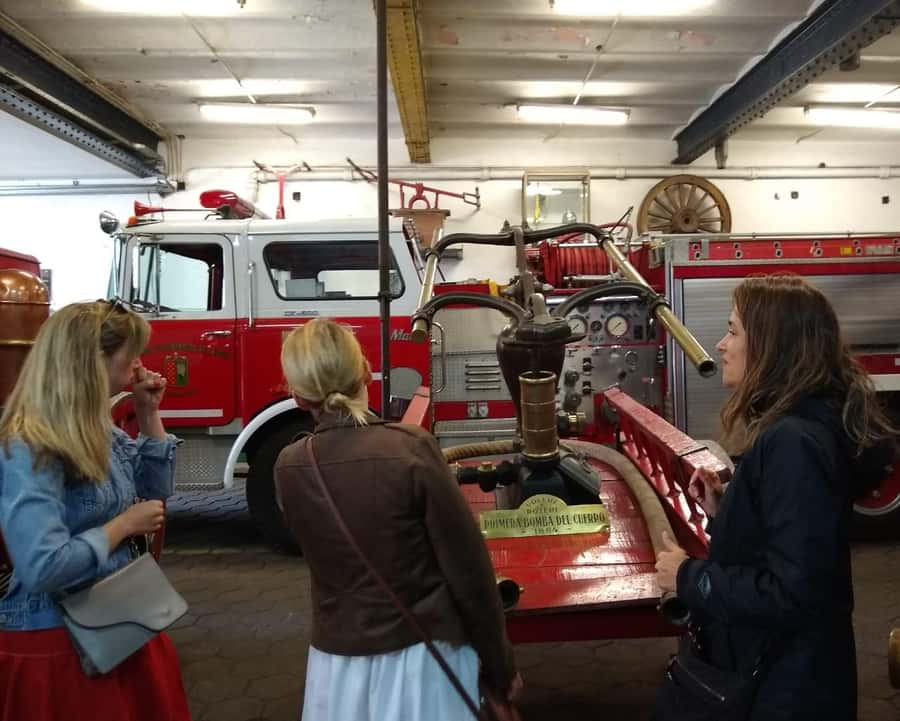
The first volunteer firefighter station created in Argentina is another major stop, and entrance is included. It is one of the clearest examples of how local associations helped communities meet shared needs.
The station belongs to a wider story of mutual assistance organizations in the neighborhood. For immigrant communities, institutions like these offered practical support and a way to build ties in a new place. The visit gives that civic history a physical setting, rather than leaving it as an abstract idea.
This is a strong stop for anyone interested in how neighborhoods work beyond their famous sights. You are not only looking at La Boca’s façades; you are learning about the local structures that helped residents respond to everyday risks and build a community.
More tours in Buenos Aires:
- Buenos Aires Hop-On Hop-Off Bus, Free Walking Tours & Discounts
★ 4.5 · 2,218 reviews - Buenos Aires: Piazzolla Tango Show with Optional Dinner
★ 4.4 · 2,122 reviews - Buenos Aires: City Highlights Guided Tour with Transfer
★ 4.7 · 1,946 reviews - Buenos Aires: Hop-On Hop-Off City Bus Tour
★ 4.2 · 1,855 reviews
Murals, Old Newspapers and a Different Side of La Boca
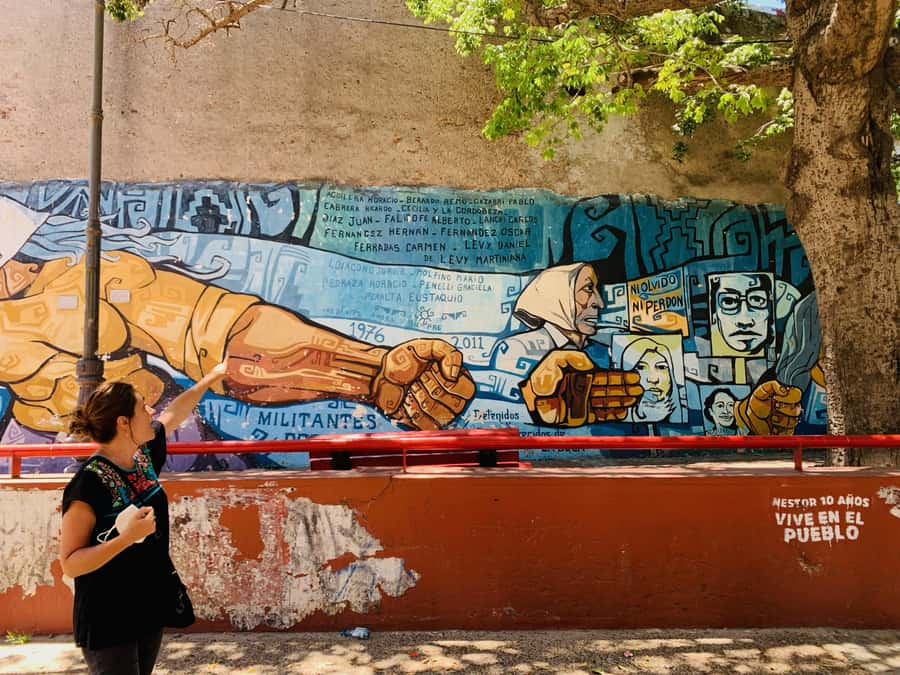
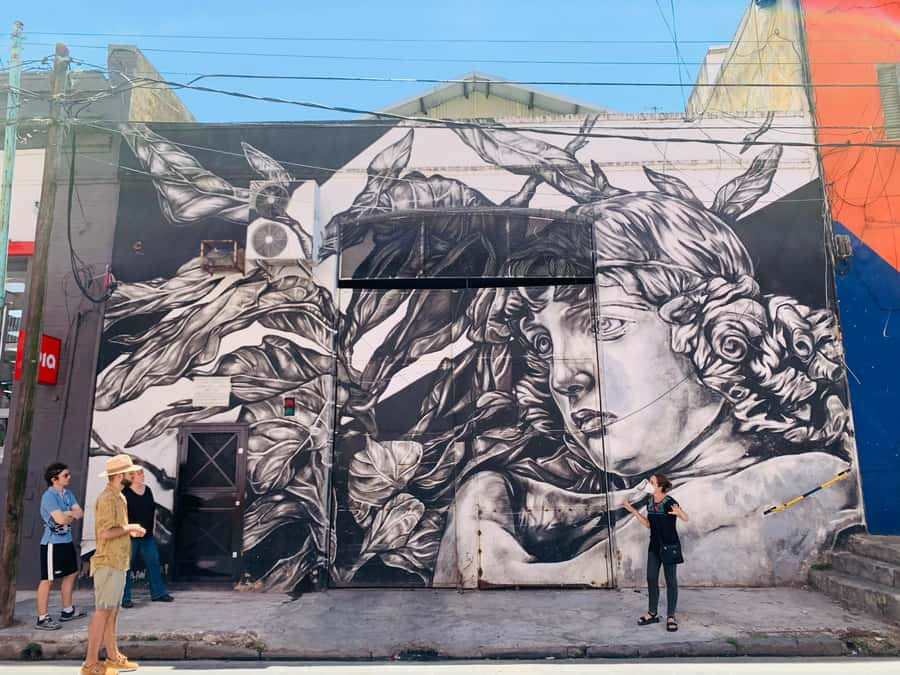
La Boca’s murals are a central part of the walk. The paintings cover social issues, so Paola’s explanations can help you look past the color and notice what a particular image is trying to say. That context matters in a neighborhood where public art is part of local identity, not just decoration for visitors.
The route also passes old buildings that once housed anarchist newspapers and bordellos in the early 20th century. These details complicate any overly tidy picture of the area. La Boca’s past includes political activity and nightlife as well as immigration, art and football.
You will not need to be an art specialist to appreciate the murals. The useful question is what they reveal about the people and concerns represented in the neighborhood. If you like to take photographs, the commentary gives you a reason to pause and consider the scene before moving on.
Boca Juniors and the Salesian Church
Two local icons appear along the route: Boca Juniors Stadium and the Salesian Church. The stadium is seen from the outside, so this is not a stadium tour or a match-day experience. Still, a look at the home of Boca Juniors helps explain why football is so closely bound to the neighborhood’s sense of self.
The passion surrounding the club was a particular focus for Paola in conversations about La Boca. Her local background can help you understand why the stadium is more than a landmark on a map. For fans, it is an obvious highlight; for everyone else, it offers a window into one of the neighborhood’s most visible traditions.
The Salesian Church provides a different kind of context. It is described as a refuge for communities with few roots in the city, alongside football’s role in local life. The contrast is revealing: neighborhood identity is built through more than one kind of gathering place.
Coffee at an 1882 Notable Café
The included coffee stop is a welcome pause in a 150-minute walk. It takes place at a notable café dating to 1882, a detail that gives the break a connection to the area’s past rather than making it a routine refreshment stop.
Coffee is included in the $35 price. Food is not, so treat this as a break and a cup of coffee, not a meal. If you want to visit the Museum of Fine Arts of La Boca, part of which was the home of Benito Quinquela Martín, that may be possible, but the museum ticket is not included.
The café stop also gives you a chance to absorb the route so far and talk with Paola. A small group can make that sort of conversation easier than a large guided walk. If you have a particular interest in the neighborhood’s art or history, ask about it while you have the chance.
Caminito: Tango, Fileteado and the Familiar La Boca
The tour finishes at Caminito, where tango and fileteado, the decorative painting style associated with Buenos Aires, appear around the streets. This is the part of La Boca many people already know from photographs, but arriving after the walk gives you a broader frame for what you see.
The contrast is useful. You have just encountered buildings tied to immigrant life, mutual aid, political history and local art. Caminito’s visual energy then becomes one piece of the neighborhood, not the whole story. Expect a lively, recognizable finish rather than an undiscovered corner.
Because the tour ends here, you can take time afterward to look around on your own. The walk itself does not promise an extended visit to each attraction, so use the final stop to revisit a street or image that caught your attention.
Is $35 a Fair Price?
At $35 per person, the value rests on the combination of local interpretation and included access. The price covers a 150-minute small-group walk, entrance to the conventillo and fire station, and coffee. You are also getting Paola’s personal connection to the neighborhood, which helps tie the sites together.
The price does not cover food or admission to the Quinquela museum. If the museum is a priority, budget for its ticket separately and confirm whether it fits into the tour’s timing. The description says it can be visited, but does not make it a guaranteed included stop.
For a traveler who wants only a quick look at Caminito, this may be more history than necessary. But if you want to understand La Boca beyond its best-known streets, the price is reasonable for the length, the small group and the visits inside local buildings.
Who Should Book This Walk?
I would recommend this tour to anyone who wants more than photographs of Caminito. It suits visitors interested in immigration, neighborhood history, murals, community organizations or the relationship between football and local identity. Paola’s childhood in La Boca makes the personal dimension especially appealing.
It is also a good choice if you prefer a small group and want the option to ask questions. The maximum group size is 10, and the tour is offered in Spanish and English. The strong response to Paola’s explanations and personal storytelling suggests that the guide is a central part of the experience, not just someone leading you from stop to stop.
The walk may be less suitable if your only goal is a stadium visit, since Boca Juniors Stadium is viewed from outside, or if you need an electric wheelchair, which is not permitted. The activity is also listed as unsuitable for people over 95. Jewelry, alcohol and drugs are not allowed.
Practical Details Before You Go
Meet at the corner of Avenida Don Pedro de Mendoza and Martín Rodríguez in La Boca. The walk finishes at Caminito, also in La Boca. Check the available start times when choosing a date.
The tour lasts 150 minutes and is offered in English and Spanish. It has a maximum group size of 10. Entrance to the fire station and conventillo, plus coffee, is included; food and the Quinquela museum ticket are not.
You can cancel up to 24 hours before the activity for a full refund, and a reserve-now, pay-later option is available. If visiting the museum matters to you, ask about it before booking, since its admission is extra and the visit is not guaranteed as part of the route.
Should You Book La Boca Out off the Beaten Track?
Book it if you want La Boca explained by someone who grew up there, and if you value access to places that a quick stroll through Caminito will not provide. The conventillo, volunteer fire station, mural context and old café make a thoughtful set of stops, while Paola’s local ties give the route its strongest personal element.
Skip it if you want a stadium interior visit, a food-focused outing or only a short walk around the main photo spots. For a history-minded visit to La Boca, though, this is a well-priced way to see more of the neighborhood and understand why its identity reaches well beyond its painted streets.
FAQ
How long is the tour?
The experience lasts 150 minutes.
Where does the tour start?
It starts at the corner of Avenida Don Pedro de Mendoza and Martín Rodríguez in La Boca.
Where does the tour finish?
It ends at Caminito in La Boca.
Which languages are available?
The live tour guide is available in Spanish and English.
How large is the group?
The tour is limited to 10 participants.
What is included in the price?
Entrance to the fire station and conventillo, plus coffee, is included.
Is food included?
No. Food is not included.
Is the Quinquela museum ticket included?
No. If you visit the museum, its ticket is not included.
Can I cancel for a refund?
Yes. You can cancel up to 24 hours in advance for a full refund.
Are there any participation restrictions?
Jewelry, alcohol and drugs are not allowed, and electric wheelchairs are not permitted. The tour is listed as unsuitable for people over 95 years.
Just added in Buenos Aires
- Tango Show at El Querandi with optional Dinner★ 4.2 · 3 reviews
- Wine Tasting in Buenos Aires★ 4.2 · 4 reviews
- Walking Tour: Buenos Aires bookstores★ 4.3 · 12 reviews
- Velez Sarsfield Football Match★ 5.0 · 3 reviews
- Private Underground Tango Immersion★ 5.0 · 31 reviews
- Tour Buenos Aires in one day on Electric Scooters★ 5.0 · 33 reviews
- Transfers from or to the airport In Argentina Your Best Choice★ 5.0 · 28 reviews
- River Plate Monumental Stadium and Museum Guided Tour★ 4.5 · 39 reviews
La Boca Tours, compared.


Buenos Aires Bike Tour: San Telmo and La Boca Districts
Read our review →
BA Flavors Food Tour in San Telmo and Boca With Local Guide
Read our review →
La Boca, a collective creation: Port, immigrants, arts and football
Read our review →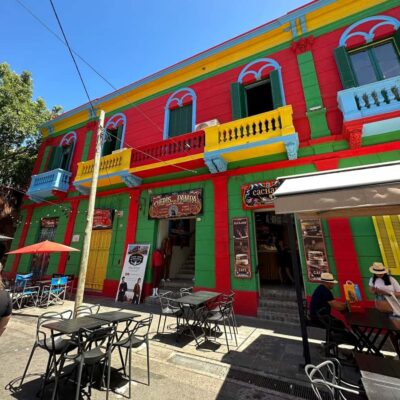
Browse the lists this tour appears in